If you've entered your first HYROX, or you're thinking about it, good on you. It's a great event for people who like a challenge, and you don't need to be an elite athlete to finish. HYROX for beginners mostly comes down to a few simple things: pick the right division, train for the format, pace it well and don't try anything new on the day.
If you're racing HYROX Auckland on 4 to 7 February 2027, here's what you need to know.
First, understand the race
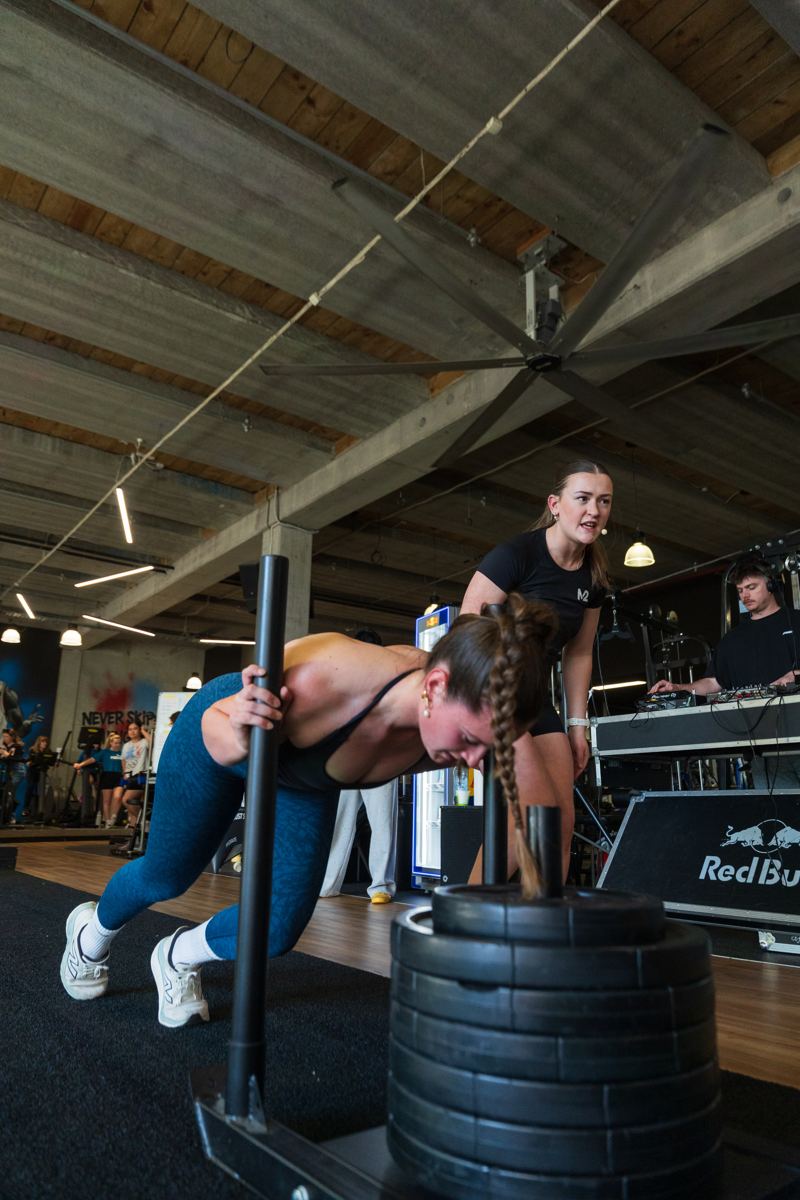
HYROX is eight 1km runs, each followed by a workout station, in the same order every time. You'll do a SkiErg, sled push, sled pull, burpee broad jumps, row, farmers carry, sandbag lunges and wall balls. Our HYROX stations explained guide covers each station, the weights and how to approach them.
Choosing a division
- Open. The standard division and where most people start. Women and Men race separately with different weights.
- Pro. Heavier weights, for experienced racers. Leave this until you've done Open and handled the weights comfortably.
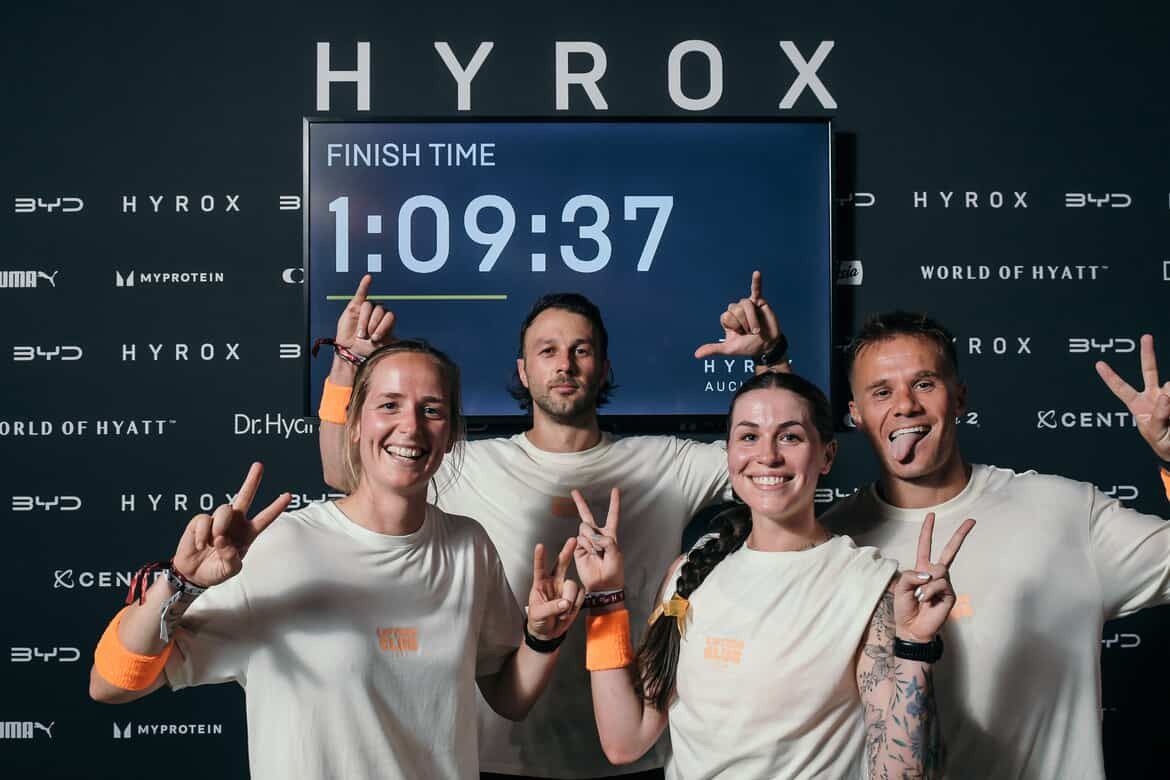
- Doubles. Two people. You run every 1km together and share the station work. A great option for a first race.
- Relay. Four people, each doing two runs and two stations. The easiest way in if you're nervous about the full distance.
Doubles and Relay have a few rules and tactics of their own. See HYROX Doubles and Relay tips if you're racing as a team.
What to wear
Keep it simple and wear things you've trained in. Running shoes you're comfortable in are the most important thing. Choose shoes with decent grip, because you'll be pushing sleds and doing burpees as well as running. Wear clothes that fit well and don't get caught up on the sled rope or restrict your lunges. Some people like knee sleeves or long socks for the lunges. Whatever you choose, test it in training first.
Check the official rulebook for anything that's not allowed on course before you pack your bag.
Race day timeline
Your exact timings will come from HYROX before the event. Races run in waves, so you'll have your own start time. As a rough guide:
- The night before. Lay out your gear, check your start time, and eat a normal dinner you know sits well.
- Morning. Eat a familiar breakfast, ideally two to three hours before your start. Nothing new.
- Arrive early. Give yourself plenty of time to check in, collect your timing chip and find your way around. The chip goes on your ankle.
- Walk the course. Look at where the run laps start and finish, and how you get in and out of the stations. It saves confusion later.
- Warm up. 10 to 15 minutes of easy jogging, some mobility and a few short, faster efforts before your wave.
- After. Cool down, eat, drink and enjoy it. Then go and cheer everyone else home.
How to pace your first race
The number one tip is to start slower than you think. The first run always feels easy because you're fresh and excited. Then the SkiErg and sled push hit, and a fast first 1km comes back to bite you.
- Run the first 1km at a pace that feels comfortable, even a little too easy.
- Aim for all eight runs to be about the same pace.
- Take the first 200m to 300m after each station a little easier while your legs come back.
- Break up the hard stations early, before you need to. Short planned rests beat long forced ones.
- Save something for the last three stations. Farmers carry, lunges and wall balls are where the race is decided.
Common first race mistakes
- Losing count of laps. Each 1km may be split into several laps and you have to count your own. Have a simple system.
- Going too hard on the SkiErg. It's the first station and it's easy to overdo it.
- Skipping station practice. Sleds on race carpet feel different. Practise the stations, especially the sleds and wall balls.
- No reps on wall balls. Squat to full depth and hit the target on every rep, or it won't count.
- Trying something new. New shoes, new gels or a new breakfast on race day is a gamble.
What time to expect
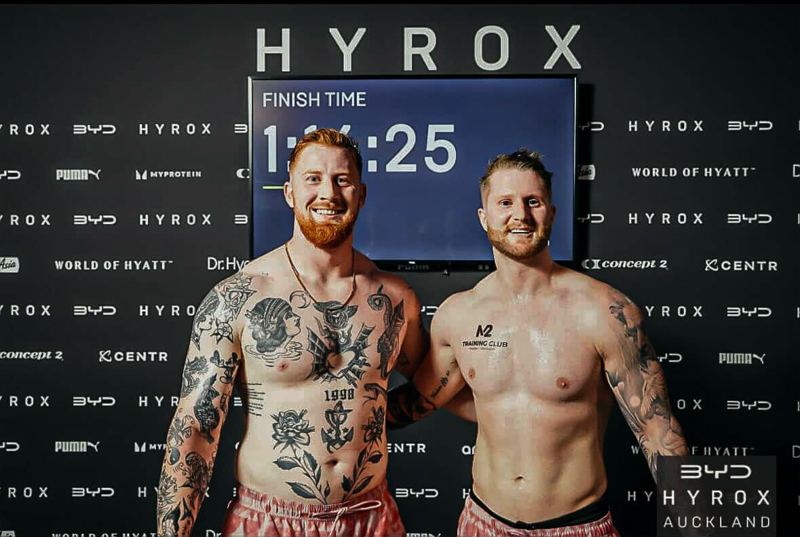
First finish times vary a lot, depending on your running, your strength, your division and how the day goes. Try not to get hung up on a number. For your first race, aim to pace it evenly, finish strong and enjoy it. Whatever time you get becomes your benchmark to beat next time.
Getting ready
Give yourself at least 12 weeks if you can. Our free 2 week HYROX plan is a good way to get started, and if running is your weak spot, start with running for beginners. Train the stations, run after them, and you'll arrive ready.